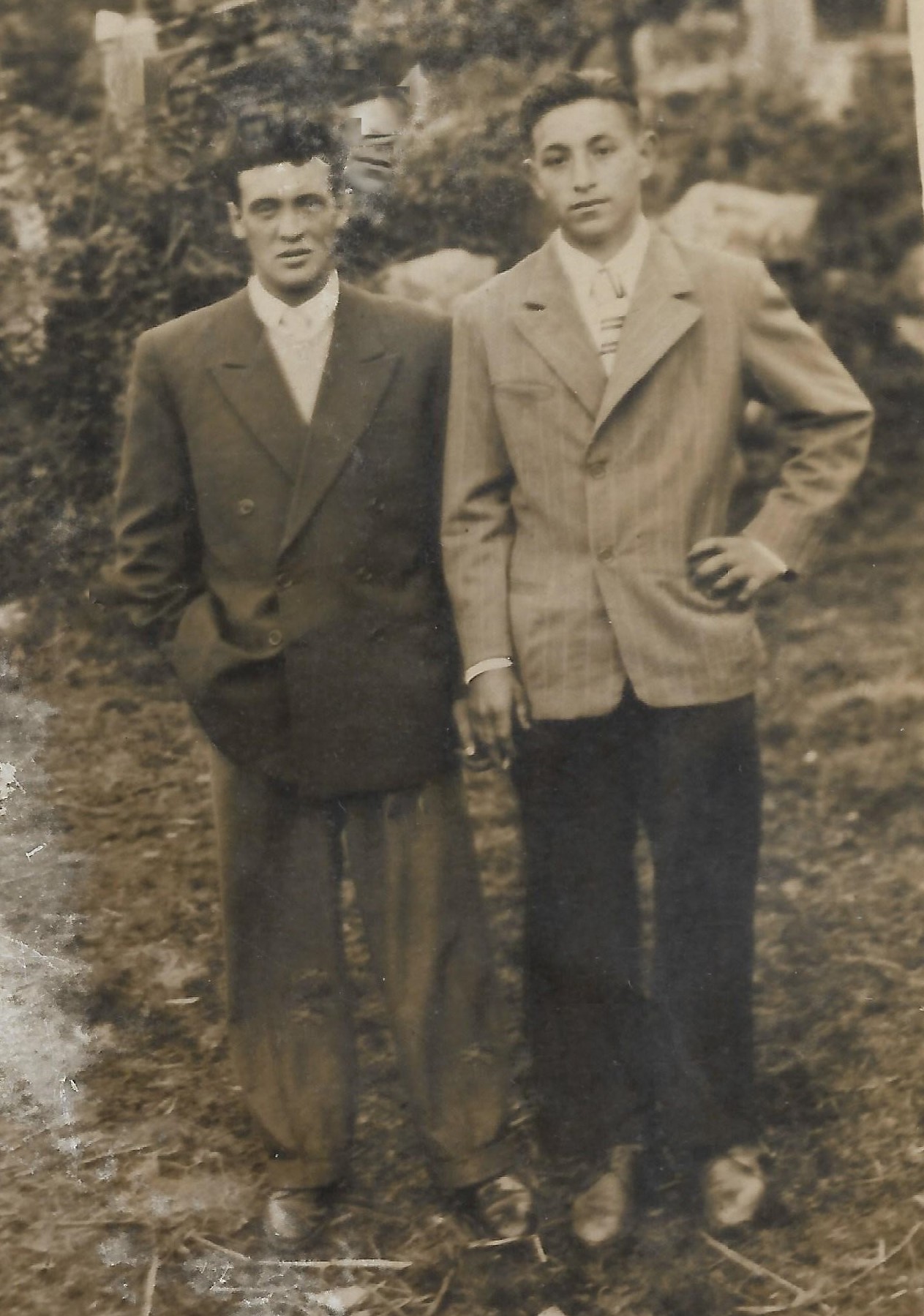
Fátima Pedrosa Alves was born on 22 January 1962 at the Rovisco Pais Colony Hospital (HCRP). She was the second of five children born to António and Maria, both patients interned at the HCRP. She had little contact with her parents, and what she came to know about them resulted from her own “research” when she was already “older.” For this reason, her life path was accompanied by many questions, to which she has been trying to find some answers.
From birth until the age of five, she lived at the HCRP Crèche, and in 1967 she moved to the Preventorium. From her memories of her time at the Crèche, she shared that “at five years old I already had a sense of responsibility that some people don’t believe. Children who didn’t wet the bed received a reward, and I didn’t, so I got the prize—making the beds, washing the chamber pots… At first I thought it was fun, but later I wanted to play like the other children and I no longer found the situation amusing.” Among the many mischiefs they got up to, she highlighted the following episode: “after lunch we went to take a nap on the canvas beds that were on the Crèche veranda, but one day Carlos and I jumped over the railing. We were reported by the shouts of the other children, and when the supervisor returned, we were punished.”
During her stay at the Preventorium, she highlighted some moments she remembers with nostalgia, such as the care they received when they were ill: “They brought meals to our beds and our favorite dessert (mashed banana with Maria biscuits and orange juice). I felt cared for when I was sick!” Or her ninth birthday: “Up until then I ate with a spoon, and I started eating with a knife and fork. On those days, everything we did was forgiven! And we could get up to mischief without punishment! It was good to know that I could be in the playground and go to the fields, cross the bramble barriers and go meet the women who were working in the fields…”
But the highlight of her time at the Preventorium was the summer and going to the beach: “When they told us we were going to the Holiday Colony it was an uproar! I would say: wonderful—we can wear shorts and don’t have to wear skirts! There were no punishments, it was total freedom. We took a vitamin B complex, which was sweet, and some vitamins before going to the beach. On our backs they applied a pink cream that smelled of strawberries. We liked that cream so much that we tried to trick the supervisors, hoping they would apply it again. It was wonderful! I remember breakfast very well: coffee with milk and bread. Even today I try to find coffee with milk with that flavor and that foam. I’ve tried in many cafés… but it’s not the same. For afternoon snack, it was bread with marmalade. We sat in a circle, and it wasn’t only children from the Preventorium—there were children from various parts of Portugal. And there, even the supervisors were relaxed!” She continues to recall with emotion the seasons spent at Gala beach, near Figueira da Foz, sharing: “There was one year—I don’t know what happened—but when we dug holes we found 50-centavo coins and even 2-escudo-and-50-centavo coins. And since there were ladies selling lollipops, we took advantage of it, and although the supervisors tried to take the money from us, sometimes we managed to buy them. It was abundance! Gala is still my beach today!”
She also said that from the age of nine she began taking care of the other children during the supervisors’ snack time, and that when they were a bit older, they helped prepare breakfasts. “One day, Edite and I dropped a pot of hot water and I burned my feet. I remember I was wearing blue socks and the van was already waiting to take us to school. Mrs Maria Luísa, who was the director, insisted that I couldn’t miss school, but then the nurse arrived and became upset because my socks were stuck to my feet and had to be removed with tweezers. I ended up missing a week of school to recover my foot. Even so, I studied, because I wanted to take the mathematics test—it was a subject I liked. I got 14! That made up for the other lower grades.”
Her relationship with the director and with some supervisors was not always easy, and she was often punished. Fátima admitted that she “was a bit restless, disobedient, different from the other children.” Sometimes they called me and I replied, “I’m coming, I’m coming!”—taking my time; I ran off to the fields to pick blackberries or watercress. And when they beat me I would say, “the more you beat me, the more I like you!” Because it was my rebellion… I was always rebellious, first because I didn’t like being a girl. Then because I did everything the boys did, and we were forced to know what a girl was supposed to do… I didn’t like domestic work and I washed the floor standing up, like the boys did…”
Another significant moment was when she took the fourth-grade exam: “we had to wear new clothes, made by the seamstresses. Our school was inside the Preventorium, but the exam was taken in Cantanhede. A few days earlier they tried on a blue dress with flowers on me. I didn’t like dresses, but since it was blue… On the day of the exam they gave me a red dress and I said I wouldn’t wear it! So I ended up going in an orange dress.” She still remembers that the exam questions were about Luís de Camões and confessed that “I liked studying; I had dreams of education!”
Fátima left the Preventorium in 1975 and still recalled many details of her time there, even managing to draw the floor plans of the Preventorium building and remember some of the songs they sang, which she wrote down to offer to the Museological Centre, together with an embroidered cloth and some photographs of the children.
During childhood, they only knew that their parents had an illness and that they could only see them in the visiting room. She remembers going in a van with her siblings to visit their parents and shared some memories of those encounters: “On one occasion, my father and mother told us they had some small almonds. And even today when I see the same ones, I remember the Preventorium. Other times they brought vanilla biscuits. And once they brought a little doll. I didn’t even like dolls, but since it was a gift from my mother, I played with it in the playground. I wanted to be a cook. I don’t know if that inclination came from the family. I went to play with Ofélia and told her: you pretend to be a nurse and I’ll go to the kitchen to make food. In the sand, I imagined a kitchen, with pots and a stove… And I told her: now you put the babies to bed, and when it’s time I’ll call you. What’s certain is that the doll got buried—I never saw it again, it disappeared!”
Later, my mother asked us: what do you want for Christmas? I’m going to make some sweaters. A blue one for your brother, green for Pedro, and pink for Fátima. I replied: I don’t like pink. So she made it yellow. On a visit, she gave us the sweaters. When we arrived at the Preventorium, Mrs Maria Luísa told us to take off the sweaters because they were going to the storeroom, since clothing was shared. I only remember wearing it that day…”
She continues sharing her memories. “An episode that still hurts me deeply happened with my father. I adored my father. I also liked my mother. But I don’t know why—my father had a way of speaking that fascinated me. And there was a year when my uncle was also there and was already cured. My parents were on the other side of the glass and my father told me: look, a gentleman is going to appear—that’s your uncle Ilídio—and you’re going to give him a kiss. My uncle had a beard, so I didn’t want to kiss him. Then my father said: if I give you a present, will you give your uncle a kiss? I replied: okay! And he gave me a pen. And to this day I like men with beards! At the end of the visit we returned to the Preventorium and Mrs Maria Luísa kept the pen… When I see a Parker pen, I remember this episode.”
As for her parents, the memories she has from that time were limited to the meetings in the visiting room: “it was seeing them there; I didn’t know their likes, we didn’t know much. We knew they loved us and wanted to know how we were.” From the family she also met her grandmother Maria in the visiting room, who was at the Rovisco Pais Colony Hospital.
About her mother, she received some news shortly before leaving the Preventorium: “I was attending lower secondary school in Figueira da Foz and the Preventorium had become too large for the few children who remained. The supervisors were leaving and were replaced by older girls who took care of us. That day I came in for lunch and was in the kitchen when a colleague spoke badly of my mother, saying she had children by another man. I reacted badly. I dropped my plate and ran to the Preventorium chapel, making the following prayer: I don’t want to be like my mother; I don’t want to have children and leave them in an institution; I want to adopt a child, and if I don’t get married by 28, I won’t marry! I didn’t marry, I couldn’t adopt the child, but I wasn’t like my mother!”
Some time later my mother phoned the Preventorium and in that call said she was very far away, in Lisbon, and that I had another brother called João Maria. And when I asked about my father she told me: your father is not here! At that time, my parents were no longer at the Hospital.
Fátima’s memories continue with her path after leaving the Preventorium: “When I finished lower secondary school, they told us we were going on holiday—some with family and others with other people—and then we would return. They told me I would go to Aveiro, to the house of a lady who lived near my brother Zé and my uncle Ilídio. I stayed in that house for four months, but I didn’t see either one. After a short time, the lady phoned the HCRP saying she wanted an older girl—that I was not of working age and should be studying. They wanted help with housework, attending a shop, and helping in the fields. I didn’t know Portuguese currency, I understood nothing about life. I came from a completely closed environment… They came to fetch me and the lady gave the money to the social worker. It was a blue note and three brown ones—I think it was 250 escudos for the four months I was there. When they fetched me from Aveiro, I thought I was going back to the Preventorium to study. Because when we left they told us we would continue studying, because Professor Bissaya Barreto provided money for the children to continue their studies. I rubbed my hands with joy: ‘I’m going back to the Preventorium!’ The social worker said no, you’re not going back to the Preventorium, ‘because you spent your time climbing trees, you didn’t study, you were a tomboy…’ I replied: do you want me to tell you my grades? And at that moment I thought: if I saw my parents through a glass, from the moment I left I should be with them. So I asked: why couldn’t I go to my parents? But they told me they didn’t know where they were.”
After this experience, Fátima passed through other institutions, including the Obra de Santa Zita and the Casa de Formação Cristã da Rainha Santa, both in Coimbra, and at times worked as a domestic servant in households where she sometimes felt unprotected and not always well treated. She confessed: “without father, without mother… I felt alone!” Therefore, she nurtured the idea: “I have to know about my parents! I wasn’t born from the air; I was born from something! My goal was always to have a father and a mother, because if I knew them through a glass, I had a right to them!”
It was during her stay at the Casa de Formação Cristã da Rainha Santa that she finally received news of her father. Fátima was then 16 years old and had returned to studying at night. She recalled that moment as follows: “Mother Assunção called me and asked what I would most like to receive. I replied: a pair of Lois jeans, because they were fashionable. She told me: that’s not it. And I said: a big watch. But that wasn’t it either. Then she insisted: but don’t you have a dream, a wish? And I replied: to have a father and a mother. She told me: I have a letter here. And I shivered—no one ever wrote to me. She said: you have a letter from your father! At that moment I forgot everything. I stayed with my father’s letter. I did nothing else, I just reread my father’s letter… If they asked me to do anything, whatever it was, I said: I won’t do it! And my father, in that letter, said something very simple: daughter, it’s the time of the 25th of April, the borders of Lisbon are full of troops, but let this pass and I’ll come and get you. This was in 1977. Because the psychologist had found my father and gave me his address. So I learned about my father, but I didn’t know about my mother. I wrote several letters. In fact, in the first letters I wrote to my father, I always asked how my mother and my brother were. That’s what I was looking for. Because that’s what I thought… I always had the idea that my youngest brother was my father’s son. When I received the letter it was a joy. At least I had a father—blessed father who had given me the pen!”
Fátima says that on the same day she received that letter, during the early hours of the morning, “the same nun woke me up early and said bluntly: Fátima, you have to go to your father’s funeral! Your uncle Ilídio and your brother Zé are on the train to take you to the funeral.” Many questions arose in Fátima’s mind: “How is it that I’ve just received a letter, on the 22nd of April, and now I’m going to his funeral?” Fátima recounts that during the train journey she learned that her father had died at São José Hospital in Lisbon, a victim of cirrhosis. “It was then that I learned that my youngest brother was not my father’s son but my uncle Ilídio’s. He said terrible things about my mother, saying she was to blame. And at that moment, I blamed my uncle for my father’s death. (…) Later, on a visit to Aveiro, my aunt began telling stories about my mother and my uncle when they were in the hospital, and according to her, he was already making advances toward my mother when she was married to my father.”
And so, since adolescence, Fátima has tried to complete a puzzle of information in order to understand her own story and that of her parents, asking questions and listening to those who knew them. Meanwhile, she learned that her parents married on 14 August 1962 at the Church of Mata Mourisca, during a provisional leave from the Hospital. She also learned that they lived in one of the small houses of the HCRP Family Units and that her father left the Hospital before her mother.